Breaking Barriers in Bariatric Care Educational Workshop Series
-
Breaking Barriers in Bariatric Care Workshop Wrap Up
05:54The workshop wrap-up session reviews various topics discussed throughout the past few weeks, including bariatric population, bias reduction strategies, safe patient handling, bariatric equipment, inclusive language, and environmental barriers.
Breaking Barriers in Bariatric Care Workshop Wrap Up
 Transcript translations are generated by AI.
Please excuse mistakes in translation.

 Timeline

 Use the AI button above to generate, or click below to upload your own captions.AI transcript unavailable. Click below to upload your own captions.Click below to upload your own captions.
Captions and ChaptersSelect a language then choose an option below to upload captions, chapters or add them manually.
 Uploaded
0:00
0:05 0:10
0:15 0:20 0:25
0:30 -
Session #11 Part 3: Bariatric Equipment at Wayne Memorial Hospital
06:47This video provides a detailed look at the equipment utilized in a bariatric patient room within a healthcare setting, highlighting the features and design standards that enhance accessibility and comfort for bariatric patients. Link to Pre- and Post-Tests: Pre-Test: https://forms.gle/KqFam19ii2mk3EWT9 Post-Test: https://forms.gle/Rfat76ZxzRcVqJ2cA
Session #11 Part 3: Bariatric Equipment at Wayne Memorial Hospital
Transcript translations are generated by AI.
Please excuse mistakes in translation.
Timeline
Use the AI button above to generate, or click below to upload your own captions.AI transcript unavailable. Click below to upload your own captions.Click below to upload your own captions.
Captions and ChaptersSelect a language then choose an option below to upload captions, chapters or add them manually.
Uploaded
0:00
0:05 0:10
0:15 0:20 0:25
0:30 -
Session #11 Pt 2: Understanding Bariatric Equipment Pt 2
06:16This video provides an overview of different types of bariatric equipment and how they are used to assist bariatric patients in their daily activities and promote safety and comfort. It emphasizes the importance of having access to this equipment for inclusive healthcare. Link to Pre- and Post-Tests: Pre-Test: https://forms.gle/N1rhp5QhhB1EGcks7 Post-Test: https://forms.gle/THcPf52gEcMbJ2BP7
Session #11 Pt 2: Understanding Bariatric Equipment Pt 2
Transcript translations are generated by AI.
Please excuse mistakes in translation.
Timeline
Use the AI button above to generate, or click below to upload your own captions.AI transcript unavailable. Click below to upload your own captions.Click below to upload your own captions.
Captions and ChaptersSelect a language then choose an option below to upload captions, chapters or add them manually.
Uploaded
0:00
0:05 0:10
0:15 0:20 0:25
0:30 -
Session #11 Part 1: Breaking Barriers in Bariatric Care: An Introduction to Bariatric Equipment
07:04This video provides an introduction to the different types of bariatric equipment, the barriers faced by bariatric patients, and the importance of selecting the right equipment to enhance safety and comfort.
Session #11 Part 1: Breaking Barriers in Bariatric Care: An Introduction to Bariatric Equipment
Transcript translations are generated by AI.
Please excuse mistakes in translation.
Timeline
Use the AI button above to generate, or click below to upload your own captions.AI transcript unavailable. Click below to upload your own captions.Click below to upload your own captions.
Captions and ChaptersSelect a language then choose an option below to upload captions, chapters or add them manually.
Uploaded
0:00
0:05 0:10
0:15 0:20 0:25
0:30 -
Session 10: Common Errors in Transferring Bariatric Patients
05:00This workshop discusses the common errors that can occur when transferring bariatric patients. It covers the importance of proper body mechanics, the Be Safer acronym, communication, and teamwork. The video demonstrates a team of three professionals working together to safely and comfortably transfer a bariatric patient.
Session 10: Common Errors in Transferring Bariatric Patients
Transcript translations are generated by AI.
Please excuse mistakes in translation.
Timeline
Use the AI button above to generate, or click below to upload your own captions.AI transcript unavailable. Click below to upload your own captions.Click below to upload your own captions.
Captions and ChaptersSelect a language then choose an option below to upload captions, chapters or add them manually.
Uploaded
0:00
0:05 0:10
0:15 0:20 0:25
0:30 -
Session #9: Safe Patient Transfers for the Bariatric Population
18:05The video discusses the challenges, guidelines, and strategies for safe patient transfers for the bariatric population. It covers the importance of proper training, identifying risk factors, using adaptive equipment, and maintaining communication throughout the transfer process.
Session #9: Safe Patient Transfers for the Bariatric Population
Transcript translations are generated by AI.
Please excuse mistakes in translation.
Timeline
Use the AI button above to generate, or click below to upload your own captions.AI transcript unavailable. Click below to upload your own captions.Click below to upload your own captions.
Captions and ChaptersSelect a language then choose an option below to upload captions, chapters or add them manually.
Uploaded
0:00
0:05 0:10
0:15 0:20 0:25
0:30 -
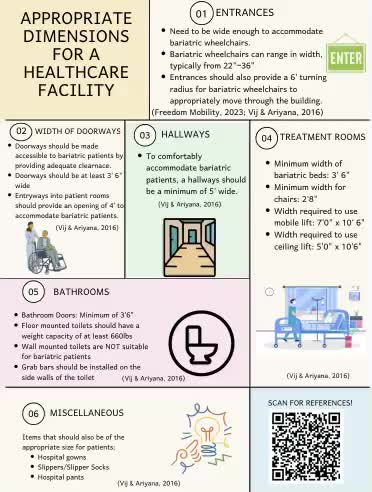
Session #8: Appropriate Dimensions for a Healthcare Facility
04:42This video discusses the importance of considering specific environmental dimensions to ensure safety, accessibility, and dignity for bariatric patients in healthcare facilities. It covers various aspects such as entrances, doorways, hallways, treatment rooms, bathrooms, and miscellaneous items, highlighting the challenges faced and the necessary accommodations for this patient population.
Session #8: Appropriate Dimensions for a Healthcare Facility
Transcript translations are generated by AI.
Please excuse mistakes in translation.
Timeline
Use the AI button above to generate, or click below to upload your own captions.AI transcript unavailable. Click below to upload your own captions.Click below to upload your own captions.
Captions and ChaptersSelect a language then choose an option below to upload captions, chapters or add them manually.
Uploaded
0:00
0:05 0:10
0:15 0:20 0:25
0:30 -
Session #7: Understanding Environmental Barriers
04:13Discussion of the environmental barriers present in healthcare for bariatric patients and the need for improved accessibility and equipment to provide quality care.
Session #7: Understanding Environmental Barriers
Transcript translations are generated by AI.
Please excuse mistakes in translation.
Timeline
Use the AI button above to generate, or click below to upload your own captions.AI transcript unavailable. Click below to upload your own captions.Click below to upload your own captions.
Captions and ChaptersSelect a language then choose an option below to upload captions, chapters or add them manually.
Uploaded
0:00
0:05 0:10
0:15 0:20 0:25
0:30 -
Session #6: Bariatric vs ADA
03:41This video discusses the required dimensions established by the ADA and compares them to the necessary dimensions needed for the bariatric population. It covers entryways, hallways, and bathrooms, highlighting the differences between ADA requirements and what is needed to accommodate bariatric patients.
Session #6: Bariatric vs ADA
Transcript translations are generated by AI.
Please excuse mistakes in translation.
Timeline
Use the AI button above to generate, or click below to upload your own captions.AI transcript unavailable. Click below to upload your own captions.Click below to upload your own captions.
Captions and ChaptersSelect a language then choose an option below to upload captions, chapters or add them manually.
Uploaded
0:00
0:05 0:10
0:15 0:20 0:25
0:30 -
Session #5: Effective Communication with the Bariatric Population
05:26This video discusses the importance of using appropriate terminology and effective communication when speaking to members of the bariatric population within the healthcare system. It emphasizes the negative effects of stigmatization, the importance of person-first language, and the benefits of empathy and trauma-informed approaches in providing respectful and dignified care.
Session #5: Effective Communication with the Bariatric Population
Transcript translations are generated by AI.
Please excuse mistakes in translation.
Timeline
Use the AI button above to generate, or click below to upload your own captions.AI transcript unavailable. Click below to upload your own captions.Click below to upload your own captions.
Captions and ChaptersSelect a language then choose an option below to upload captions, chapters or add them manually.
Uploaded
0:00
0:05 0:10
0:15 0:20 0:25
0:30 -
Session #4: Mediation to Reduce Bias
05:27This video discusses the benefits of mindfulness meditation in reducing bias, as well as other types of meditation such as body scan, Tai Chi, walking meditation, and yoga. The video also includes a guided mindfulness meditation session and encourages viewers to complete a post-test.
Session #4: Mediation to Reduce Bias
Transcript translations are generated by AI.
Please excuse mistakes in translation.
Timeline
Use the AI button above to generate, or click below to upload your own captions.AI transcript unavailable. Click below to upload your own captions.Click below to upload your own captions.
Captions and ChaptersSelect a language then choose an option below to upload captions, chapters or add them manually.
Uploaded
0:00
0:05 0:10
0:15 0:20 0:25
0:30 -
Session #3: Strategies to Reduce Bias in Practice
03:53The video discusses different types of bias and strategies to reduce bias in practice. It covers implicit bias, explicit bias, weight bias, and strategies such as meditation, self reflection, education, and self assessment.
Session #3: Strategies to Reduce Bias in Practice
Transcript translations are generated by AI.
Please excuse mistakes in translation.
Timeline
Use the AI button above to generate, or click below to upload your own captions.AI transcript unavailable. Click below to upload your own captions.Click below to upload your own captions.
Captions and ChaptersSelect a language then choose an option below to upload captions, chapters or add them manually.
Uploaded
0:00
0:05 0:10
0:15 0:20 0:25
0:30 -
Session #2: Understanding & Addressing Bias in Healthcare for Bariatric Patients
06:52This video discusses the different types of bias present in the healthcare system and how they impact patients within the bariatric population. It examines implicit bias, explicit bias, weight bias, mental health aspects of weight bias, factors influencing weight bias, and differences between weight normative and weight inclusive approaches. The video concludes with advocacy and education as ways to address bias in healthcare for bariatric patients.
Session #2: Understanding & Addressing Bias in Healthcare for Bariatric Patients
Transcript translations are generated by AI.
Please excuse mistakes in translation.
Timeline
Use the AI button above to generate, or click below to upload your own captions.AI transcript unavailable. Click below to upload your own captions.Click below to upload your own captions.
Captions and ChaptersSelect a language then choose an option below to upload captions, chapters or add them manually.
Uploaded
0:00
0:05 0:10
0:15 0:20 0:25
0:30 -
Session #1: Understanding the Bariatric Population
13:36An educational workshop on caring for the bariatric patient, covering topics such as obesity, body shapes, BMI, and healthcare practices. It also discusses the Health at Every Size framework and interventions for the bariatric population.
Session #1: Understanding the Bariatric Population
Transcript translations are generated by AI.
Please excuse mistakes in translation.
Timeline
Use the AI button above to generate, or click below to upload your own captions.AI transcript unavailable. Click below to upload your own captions.Click below to upload your own captions.
Captions and ChaptersSelect a language then choose an option below to upload captions, chapters or add them manually.
Uploaded
0:00
0:05 0:10
0:15 0:20 0:25
0:30


 Uploaded